
May
Table of Contents
ToggleThe Pursuit of Perfection: How Ninjutso Redefined the Competitive Gaming Mouse
In the cutthroat world of competitive gaming, hardware is often marketed with flashy RGB lighting, aggressive “gamer” aesthetics, and over-the-top marketing jargon. But for the purists—the “aim trainers,” the Valorant professionals, and the enthusiasts lurking in the corners of r/MouseReview—there is a different set of criteria. They don’t want lights; they want less. Less weight, less latency, and less friction.
Enter Ninjutso.
Founded in 2019, Ninjutso was born not as a corporate spin-off, but as a boutique passion project. Its mission was simple yet incredibly difficult to execute: create the ultimate performance-driven peripherals by stripping away the gimmicks and focusing on the raw engineering that actually helps you hit headshots. Today, Ninjutso is widely regarded as a disruptor, challenging giants like Logitech and Razer by proving that a small, dedicated team can out-engineer the industry leaders.

The “No-Hole” Revolution: Engineering the Impossible
To understand why Ninjutso is a household name in the enthusiast community, you have to understand the Lightweight Mouse War. For years, the only way to make a mouse light (under 60 grams) was to drill holes into the shell. This “honeycomb” design became an industry standard, but it came with flaws: it collected dust, felt “creaky” under pressure, and many users found the texture uncomfortable.
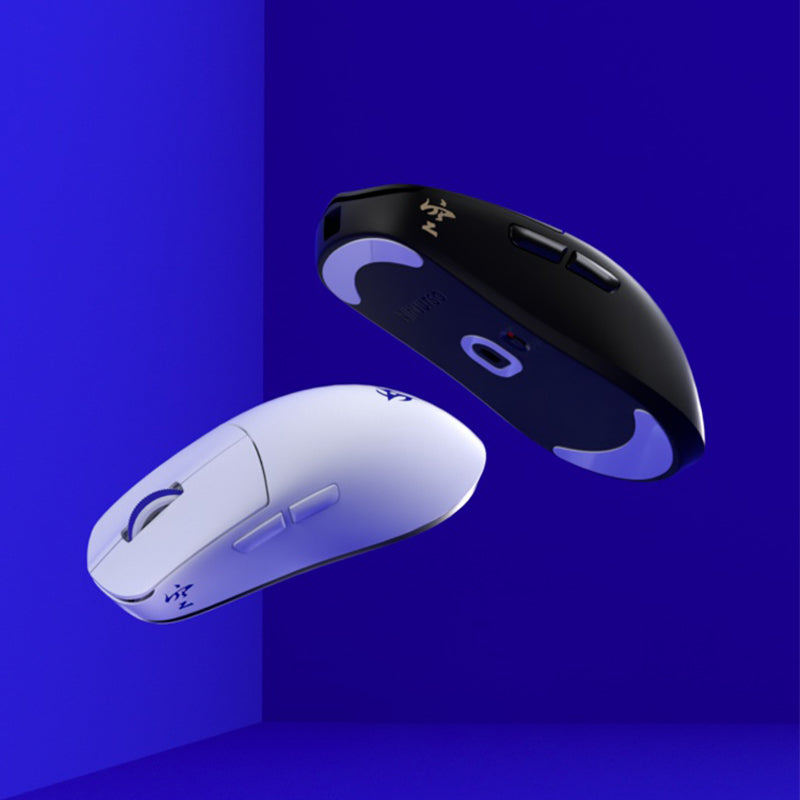
Ninjutso’s defining moment was the refusal to compromise. They set out to build mice that were lighter than the competition while maintaining a solid, holeless shell.
Materials Science: By using aerospace-grade polycarbonate and advanced injection molding techniques, they managed to keep shell walls thin enough to save weight but structurally reinforced enough to prevent flexing.
The Sora V2 Milestone: Their latest flagship, the Sora V2, weighs a mind-bending 39 grams. To put that in perspective, that is roughly the weight of seven sheets of standard printer paper. Achieving this without a single hole in the top shell is considered a masterclass in structural engineering.
Shape is King: Honoring the Legends
In the world of gaming peripherals, “Shape is King.” You can have the fastest sensor in the world, but if the mouse doesn’t fit your hand naturally, your performance will suffer. Ninjutso’s design philosophy is rooted in geometry.
Instead of reinventing the wheel with “abstract” shapes, Ninjutso looked at the history of legendary mice and refined them for the modern era.
1. The Origin One X (The Ergo Tribute)
Ninjutso’s first major success was the Origin One X. Its shape was a direct homage to the Microsoft Intellimouse Explorer 3.0, a shape so iconic it defined an entire generation of shooters. Ninjutso took that ergonomic comfort, shant it down slightly for better control, and turned it into a 66g wireless powerhouse.
2. The Katana Superlight
The Katana was a tribute to the Microsoft IMO 1.1. It featured a completely symmetrical, “egg-like” shape that provided incredible stability for those who use a “palm-claw” hybrid grip. By reviving these classic shapes with modern internals, Ninjutso won the hearts of veteran gamers who missed the shapes of the early 2000s but needed modern 1,000Hz+ wireless performance.
3. The Sora Series (The Claw Grip Specialist)
While the previous models were tributes, the Sora was a unique evolution. Designed specifically for claw grip users, it features a tapered waist and a pronounced rear hump that sits perfectly in the palm. This shape allows for micro-adjustments that are crucial in tactical shooters like Counter-Strike 2.
Technical Prowess: SnappyFire and 8K Polling
A pretty shell is useless if the internals can’t keep up. Ninjutso developed their own proprietary wireless technology, dubbed SnappyFire.
In competitive gaming, “latency” is the enemy. SnappyFire ensures that the connection between the mouse and the PC is as fast as a wired connection, with zero dropouts.
The 8,000Hz Frontier: With the release of the Sora V2, Ninjutso moved into the “8K” era. While standard gaming mice report their position 1,000 times per second, an 8K-compatible mouse reports 8,000 times per second. This results in much smoother cursor movement, especially on modern 240Hz or 360Hz monitors.
Optical Switches: By utilizing optical switches instead of traditional mechanical ones, Ninjutso eliminated “double-clicking” issues and reduced the “debounce delay” to nearly zero. When you click, the signal is sent at the speed of light.
Software Reinvented: The Web-Based Future
One of the biggest complaints gamers have with brands like Razer (Synapse) or Logitech (G Hub) is the “bloatware.” These programs often require accounts, stay open in the background, and consume valuable system resources.
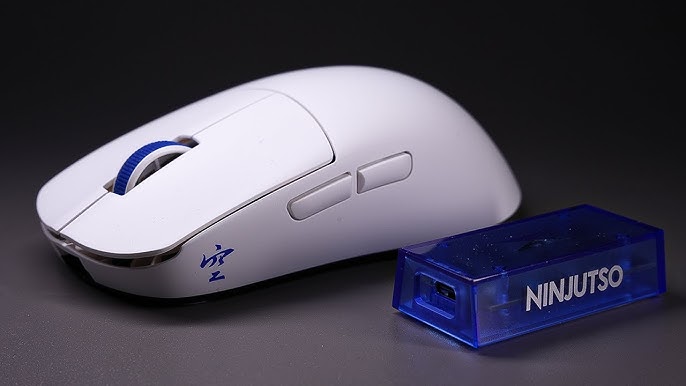
Ninjutso took a radical approach with NinjaForce, their web-based driver.
No Installation: You don’t download anything. You simply open a browser (Chrome or Edge), and the website communicates directly with the mouse via the HID (Human Interface Device) protocol.
On-Board Memory: Once you change your DPI, Polling Rate, or Lift-off Distance, the settings are saved directly onto the mouse’s hardware. You can close the tab, and the mouse will remember your settings on any computer, even if it’s at a tournament or a LAN party.
Privacy: No accounts, no data tracking, no “startup” delays. It is arguably the most user-friendly software solution in the industry today.
Beyond the Mouse: The NPC Mousepad
Understanding that the “glide” is only half-dependent on the mouse, Ninjutso expanded into high-end surfaces. The Ninjutso NPC mousepad became an overnight sensation.
Most gaming pads use a rubber base that can slip or feel inconsistent. The NPC uses a Poron-style base (an expensive, Japanese high-density foam) that grips the desk like glue and provides a consistent “squish” for stopping power. It bridge the gap between “speed” pads and “control” pads, offering a balanced surface that caters to the “sub-50g” mouse movement style.
The Boutique Advantage: Community-First
What truly sets Ninjutso apart is their relationship with the community. Because they are a small team, they are incredibly agile. When the community suggested a smaller version of a mouse or complained about a specific coating, Ninjutso listened.
They often participate in forums and Discords, taking direct feedback from the “hardcore” users. This “Community-First” approach has built a level of brand loyalty that larger corporations simply cannot buy. When you buy a Ninjutso product, you feel like you are supporting a group of gamers who are just as obsessed with “the perfect flick” as you are.

Conclusion: The Future of the Ninja
Ninjutso has proven that “Premium” doesn’t have to mean “Corporate.” By focusing on structural integrity, weight reduction, and user-friendly software, they have forced the rest of the industry to step up.
In a few short years, they moved from being a “niche hobbyist brand” to a legitimate contender for the best gaming mouse on the market. Whether you are a professional esports athlete looking for that 1% edge, or a casual gamer who just wants a mouse that doesn’t feel like a heavy brick, Ninjutso represents the cutting edge of what is possible.
The shadow of the ninja is no longer just a myth from ancient Japan; in the world of PC gaming, it is the symbol of a 39-gram revolution.

