Post
HyperX Cloud III Gaming Headset Review: Comfort King or Overrated Successor?
May
The gaming headset market has become incredibly crowded over the last few years, with brands constantly pushing new features like spatial audio, ultra-low latency wireless technology, and AI-powered microphones. Despite all of these innovations, many gamers still care most about the fundamentals: comfort, sound quality, microphone clarity, and long-term durability.
That is exactly where the HyperX Cloud III Gaming Headset tries to dominate.
As the successor to the legendary HyperX Cloud II, the Cloud III had massive expectations from the gaming community. The Cloud II became one of the most popular gaming headsets ever thanks to its comfort, reliable sound profile, and strong value for money. Naturally, many players hoped the Cloud III would improve upon everything that made its predecessor successful.
Instead of completely redesigning the headset, HyperX chose a more refined approach. The Cloud III keeps the familiar design philosophy while improving comfort, microphone quality, and overall build refinement.
But after months of reviews, comparisons, and community feedback, one question still remains: is the HyperX Cloud III truly an upgrade, or is it simply a different version of the Cloud II?
Design and Build Quality
At first glance, the Cloud III looks very familiar. HyperX clearly followed the “if it isn’t broken, don’t fix it” philosophy with this release.
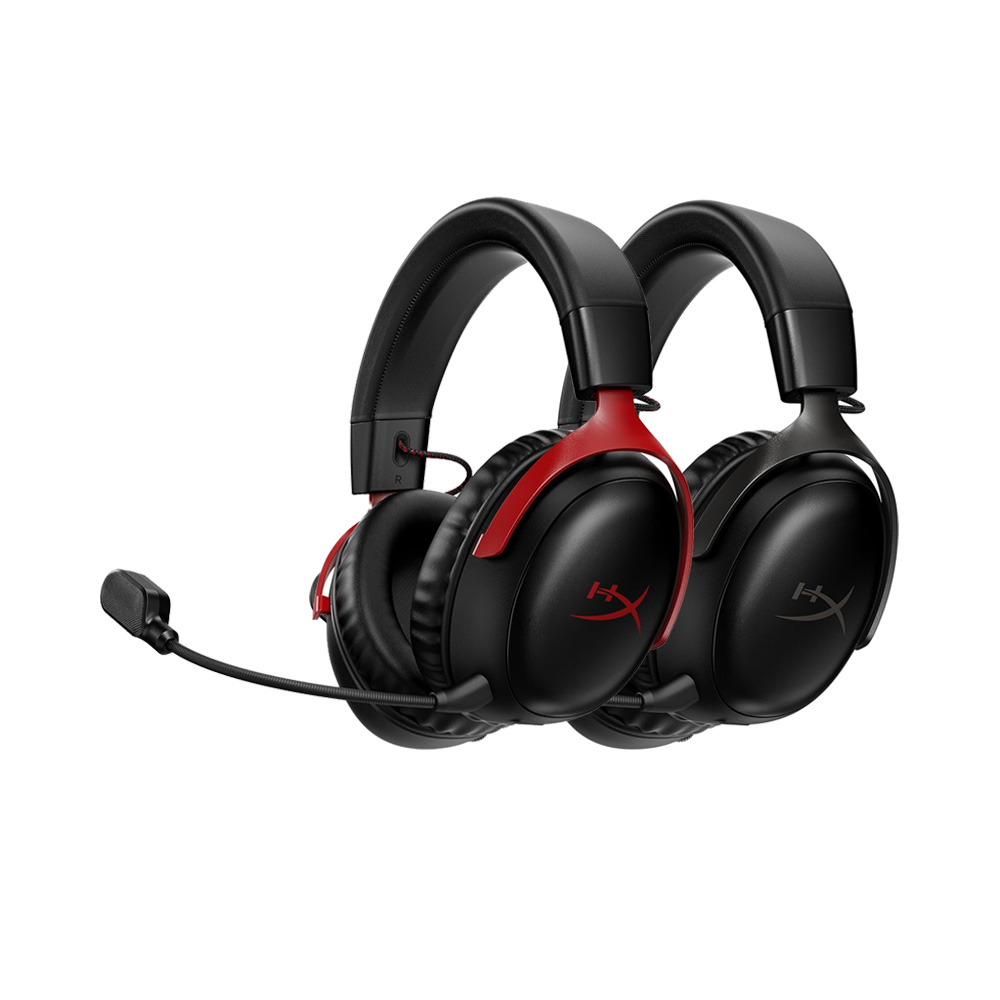
The headset retains the classic Cloud series appearance with its aluminum frame, large earcups, detachable microphone, and clean gamer-focused aesthetic. However, there are several subtle improvements that make the headset feel more modern and refined.
One of the biggest upgrades is comfort.
Multiple reviewers praised the Cloud III for being one of the most comfortable gaming headsets currently available. Tom’s Hardware described the headset as “very comfortable” with a lightweight fit that works well during extended gaming sessions.
The ear cushions feel softer compared to older Cloud models, while the headband padding has also been improved slightly. PC Gamer specifically mentioned that the angled earcups and plushier headband create a noticeably better fit for marathon gaming sessions.
This comfort-focused design becomes especially important for competitive players who spend multiple hours gaming every day.
The build quality also feels excellent overall. The aluminum yokes help the headset feel durable without becoming overly heavy. Unlike some modern gaming headsets that rely heavily on cheap plastic construction, the Cloud III still feels premium in hand.
Another nice improvement is the cleaner aesthetic. HyperX removed some of the more aggressive “gamer” styling from previous generations, making the headset look more mature and professional.

Sound Quality
The Cloud III’s sound profile has become one of the most debated aspects of the headset.
Compared to the older Cloud II, the Cloud III delivers a more neutral and balanced tuning. Instead of emphasizing heavy bass, HyperX focused more on clarity, detail, and positional accuracy.
For competitive FPS gaming, this is actually a major advantage.
Footsteps, reloads, and directional audio cues feel easier to identify compared to older Cloud models. Several Reddit users praised the improved imaging and positional audio performance, especially in tactical shooters.
Imaging and soundstage: great improvement over the cloud 2 specifically in imaging, making these one of the easiest gaming headsets i’ve tried for catching footsteps.
People still haven’t realized that the Cloud 3 was completely redesigned by HP to be a headset for competitive gaming.
Many players coming from the Cloud II initially felt disappointed because the Cloud III has less bass and a less “fun” sound signature. The Cloud II was known for its warmer and more immersive audio, while the Cloud III feels more analytical and competitive-focused.
This creates a split in community opinion.
Players who prioritize immersive single-player games, movies, or bass-heavy music may actually prefer the older Cloud II tuning. Meanwhile, competitive FPS players often appreciate the improved clarity and positional accuracy of the Cloud III.
PC Gamer praised the headset’s bass performance overall but also noted that the virtual surround sound implementation feels weak compared to competitors.
The DTS surround feature is functional, but most competitive players will probably prefer stereo mode anyway for better directional consistency.
Gaming Performance
The Cloud III performs best in competitive games.
Games like VALORANT, Counter-Strike 2, and Call of Duty: Warzone benefit heavily from accurate imaging and clean mid/high frequencies.
The headset’s improved tuning helps separate footsteps and environmental sounds more clearly during intense gameplay situations.
The lightweight design also helps reduce fatigue during long ranked sessions or tournaments.
One area where the Cloud III noticeably improves over the Cloud II is microphone quality.
Several reviewers and community users praised the new microphone for sounding clearer and more natural. Reddit users specifically highlighted that the microphone captures vocals more cleanly without sounding muffled.
The detachable microphone design also remains extremely convenient for users who want flexibility between gaming and casual media use.
However, not everything is perfect.
Some users reported that the Cloud III sounds quieter than expected compared to older HyperX headsets. Others mentioned that certain firmware or software configurations caused inconsistent audio behavior.
While these complaints are not universal, they appear frequently enough in community discussions to be worth mentioning.

Software Experience
The Cloud III supports HyperX Ngenuity software for DTS surround sound and additional customization features.
Unfortunately, the software experience remains one of the weakest parts of the headset.
Many Reddit users criticized the software for bugs, crashes, or inconsistent functionality.
Hyperx ingenuity app is crashing software cannot be updated…
Fortunately, the headset itself still works perfectly fine without relying heavily on the software suite.
Most users simply plug it in and use stereo mode without major issues.
The wired connectivity is another advantage. Unlike wireless gaming headsets that require charging and battery management, the Cloud III delivers a consistent low-latency experience without needing constant maintenance.
The included USB dongle and 3.5mm compatibility also make the headset versatile across PC, PlayStation, Xbox, and mobile devices.
Comfort and Daily Use
Comfort is arguably the Cloud III’s strongest feature overall.
Even users who disliked certain aspects of the sound profile still admitted that the headset feels excellent during extended use.
The memory foam earcups distribute pressure very evenly, while the clamping force feels secure without becoming uncomfortable.
Users who wear glasses also frequently praised the Cloud III for remaining comfortable during long sessions.
Battery life is obviously not a concern because this is a wired headset, which many competitive players still prefer for reliability and simplicity.
The detachable cable and microphone also improve long-term durability since damaged parts can be replaced more easily.

Downsides
Despite being a strong overall headset, the Cloud III still has several weaknesses.
The biggest issue is the divisive sound tuning.
Players expecting the same bass-heavy “fun” sound profile as the Cloud II may initially feel disappointed. Several Reddit discussions criticized the Cloud III for sounding flatter, quieter, or less immersive compared to previous generations.
Some users also experienced software instability through HyperX Ngenuity and DTS features.
Additionally, while the microphone quality improved significantly, the mute button and controls can feel slightly loud or awkward during use according to some reviewers.
Finally, competition in the sub-$100 gaming headset market is extremely strong right now. Headsets from SteelSeries, Logitech, and Razer all compete aggressively within the same price category.
Final Verdict
The HyperX Cloud III is not a revolutionary gaming headset — and honestly, it does not need to be.
Instead, HyperX focused on refining the formula that made the Cloud series so popular in the first place:
- Excellent comfort
- Strong build quality
- Reliable wired performance
- Improved microphone clarity
- Better competitive gaming audio
For FPS players especially, the improved imaging and directional sound make the Cloud III a genuinely strong competitive headset.
However, the more neutral sound signature also makes it one of the most polarizing HyperX headsets ever released. Players who loved the warm, bass-heavy immersion of the Cloud II may not immediately enjoy the Cloud III’s more analytical tuning.
Still, for gamers who prioritize comfort, competitive performance, and long-session usability, the Cloud III remains one of the best wired gaming headsets currently available under the premium flagship price range.
It may not completely replace the legacy of the Cloud II for everyone, but the HyperX Cloud III absolutely succeeds as a modern competitive gaming headset built for today’s esports-focused gaming environment.